Technology

From Solar Dryer
to production site.

The Solar Dryer dries harvests without electricity and without fuel. It is built on site and grows with its users: from a single unit to an industrial system to a local production site.

How the Solar Dryer works.

Six parts, one cycle of sun and air.

Collector surface

The sun heats the air beneath the cover. No grid power, no fuel.

Air inlet

Cool air flows in from below and keeps the cycle going.

Drying chamber

Five stacked trays. The warm air flows evenly through the produce.

Loading

Loaded from the side without letting the chamber cool down.

Chimney draught

The moist air rises and escapes through the chimney.

Set-up

Stands without a foundation and can be set up wherever the harvest happens.

010203040506
  1. 01

    Collector surface

    The sun heats the air beneath the cover. No grid power, no fuel.

  2. 02

    Air inlet

    Cool air flows in from below and keeps the cycle going.

  3. 03

    Drying chamber

    Five stacked trays. The warm air flows evenly through the produce.

  4. 04

    Loading

    Loaded from the side without letting the chamber cool down.

  5. 05

    Chimney draught

    The moist air rises and escapes through the chimney.

  6. 06

    Set-up

    Stands without a foundation and can be set up wherever the harvest happens.

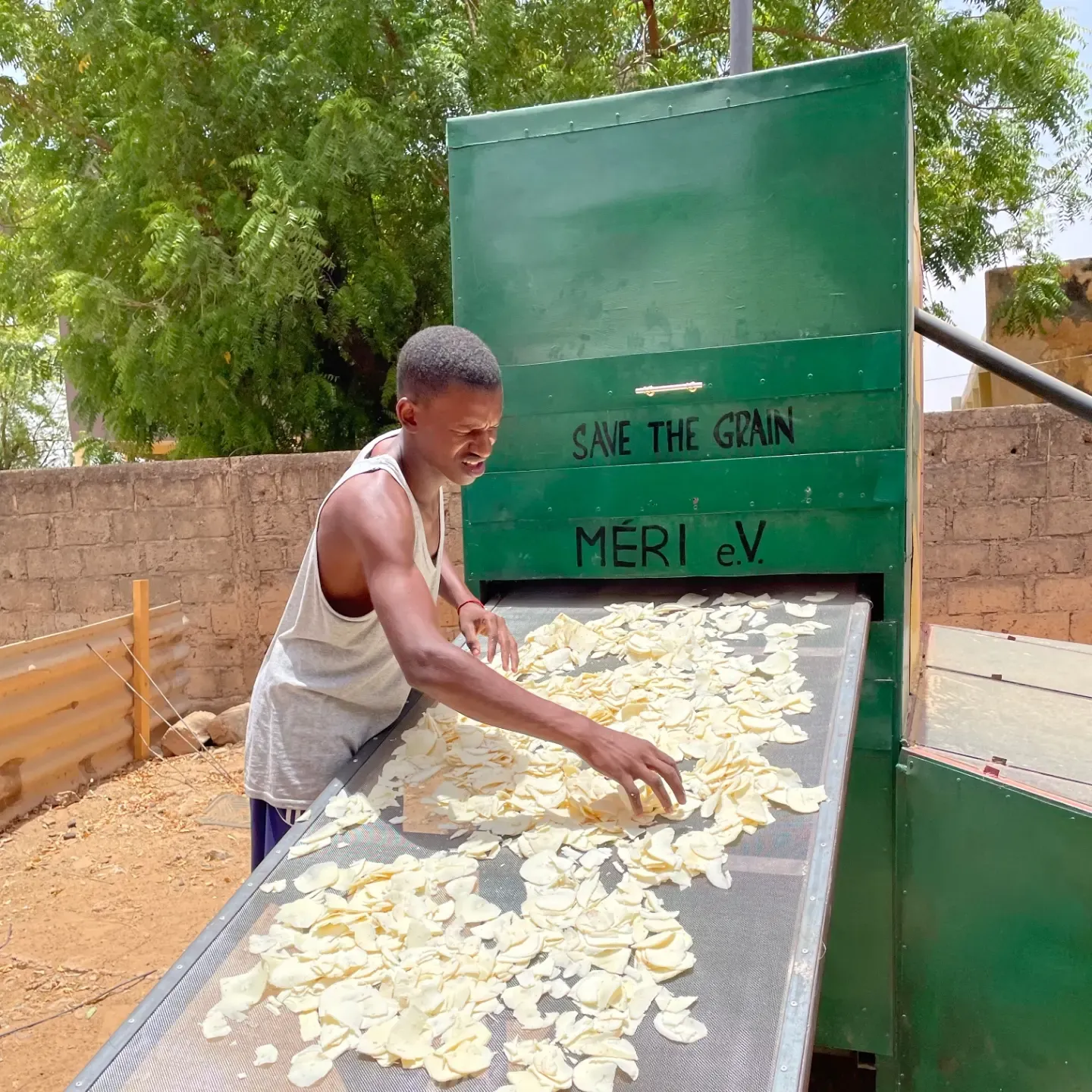
A man loading the Solar Dryer with freshly cut fruit

Module 01

Solar Dryer

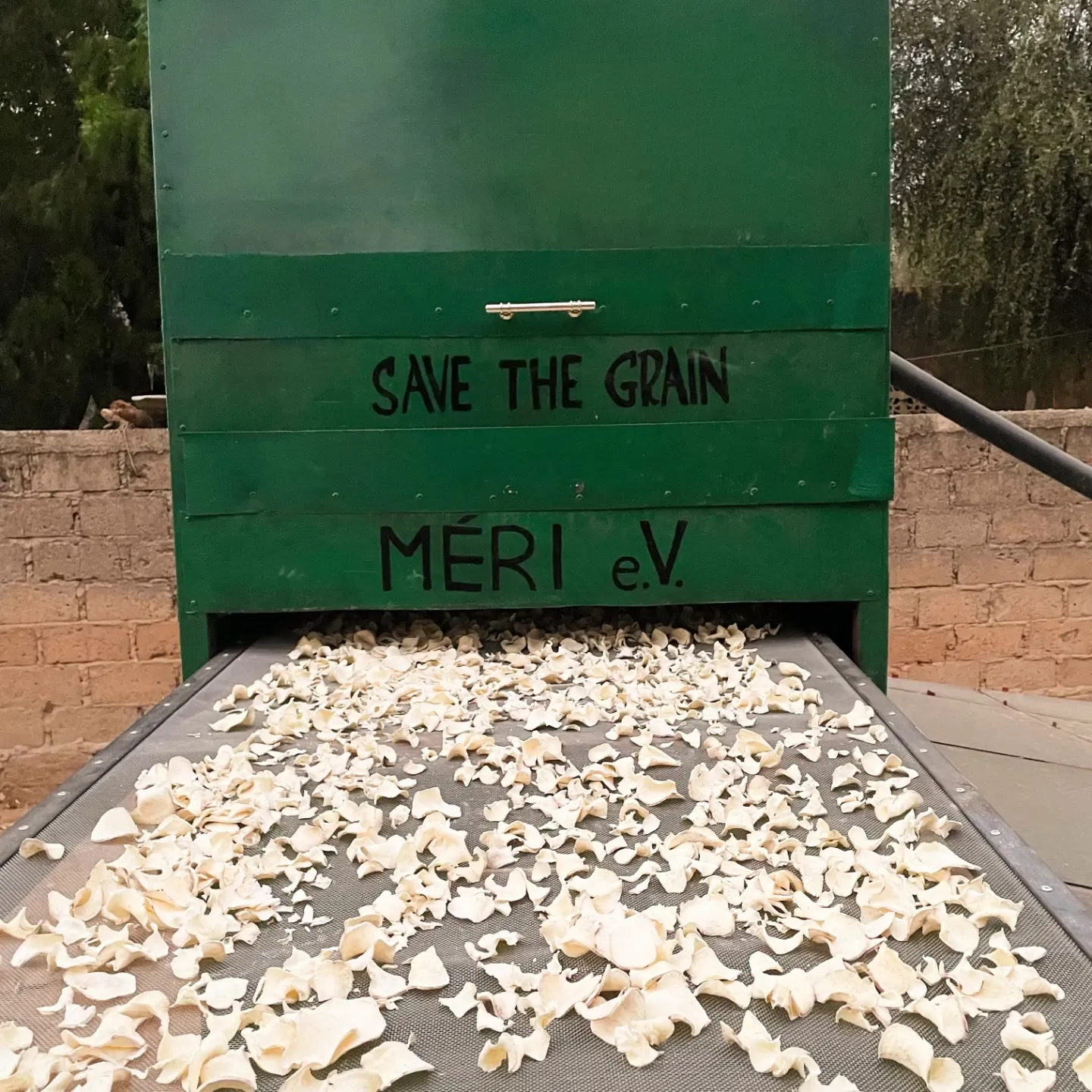
Our Solar Dryer dries grain, vegetables and fruit with nothing but the heat of the sun, without grid power and without fuel. It is built on site with local craftspeople and run by the cooperatives themselves. More of the harvest is preserved, and farmers can sell later at better prices.

~10 %
post-harvest loss instead of up to 30 %
~100 kg
per batch
0 kWh
grid power, 100 % solar energy

Built on site

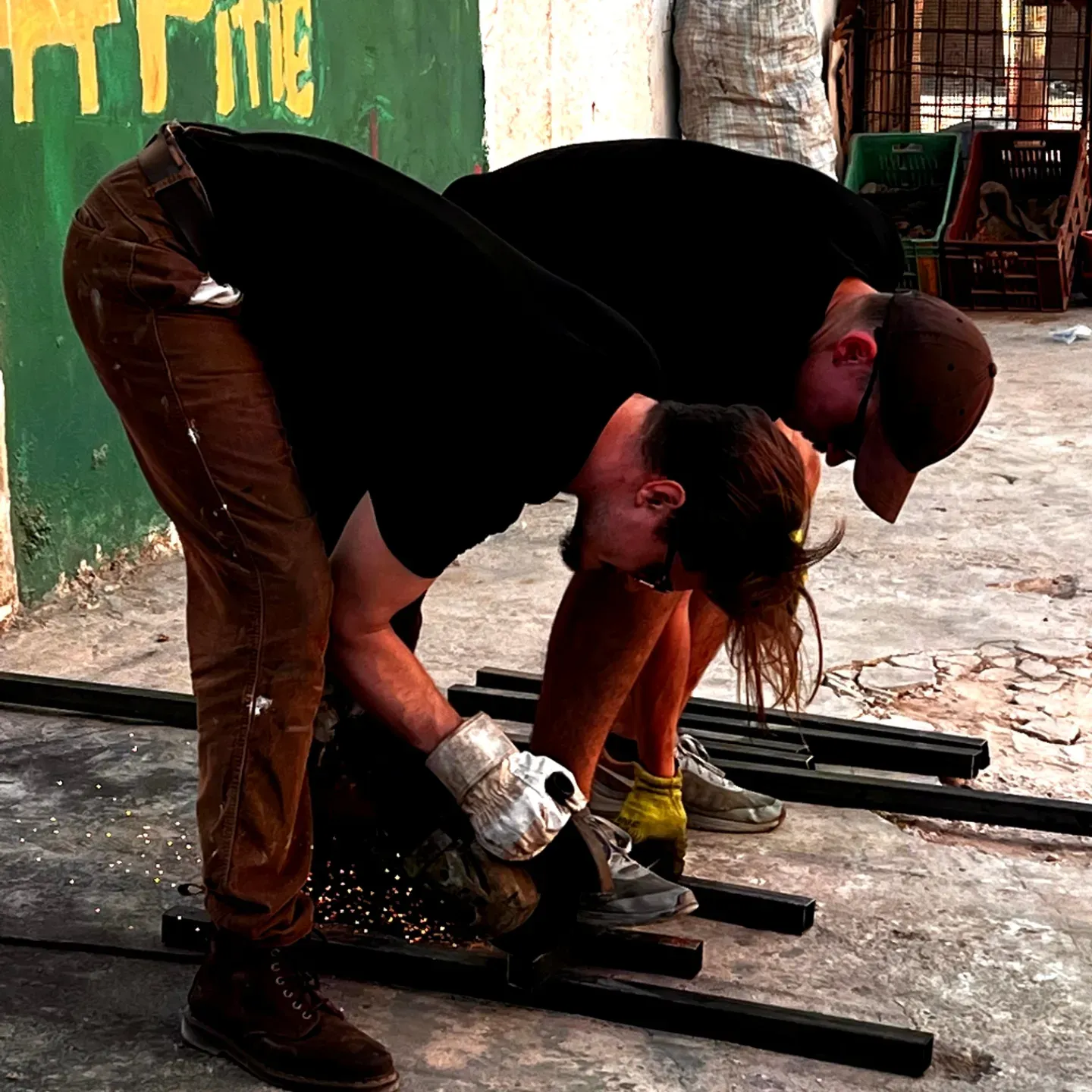
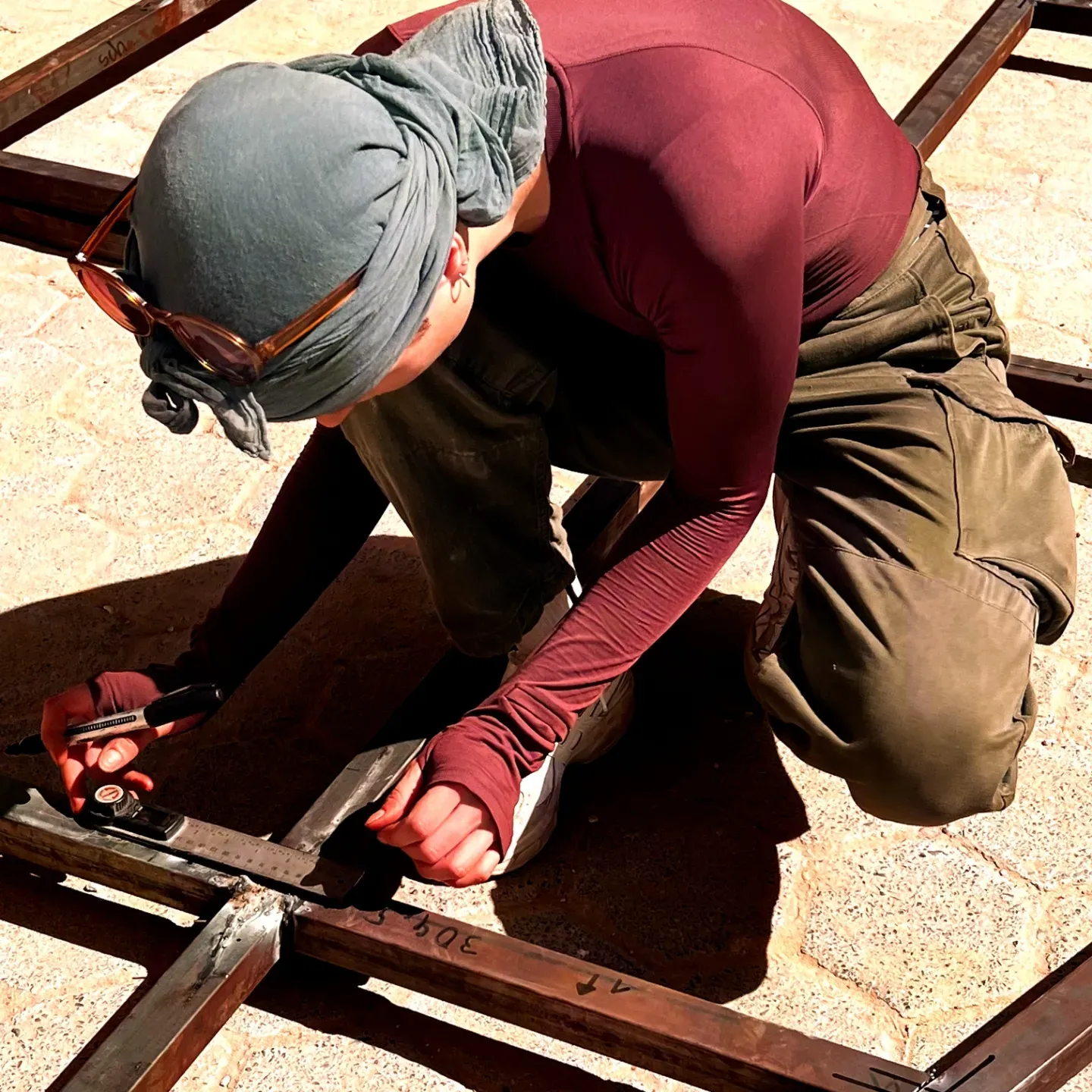
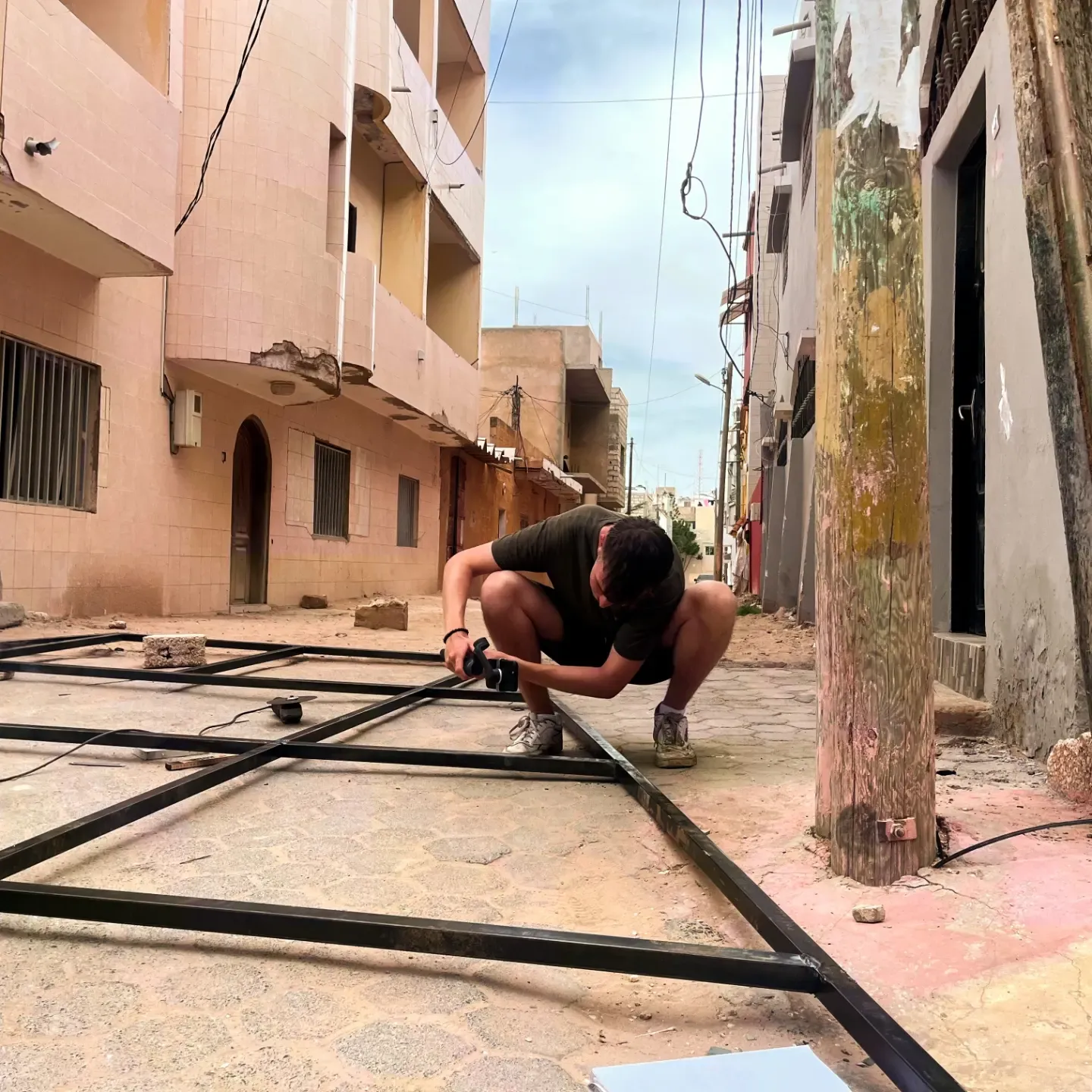
Welded and assembled in Senegal, Togo and Guinea-Bissau.

  • Welding the frame

    Welding the frame

  • The frame on site

    The frame on site

  • Assembling the chamber

    Assembling the chamber

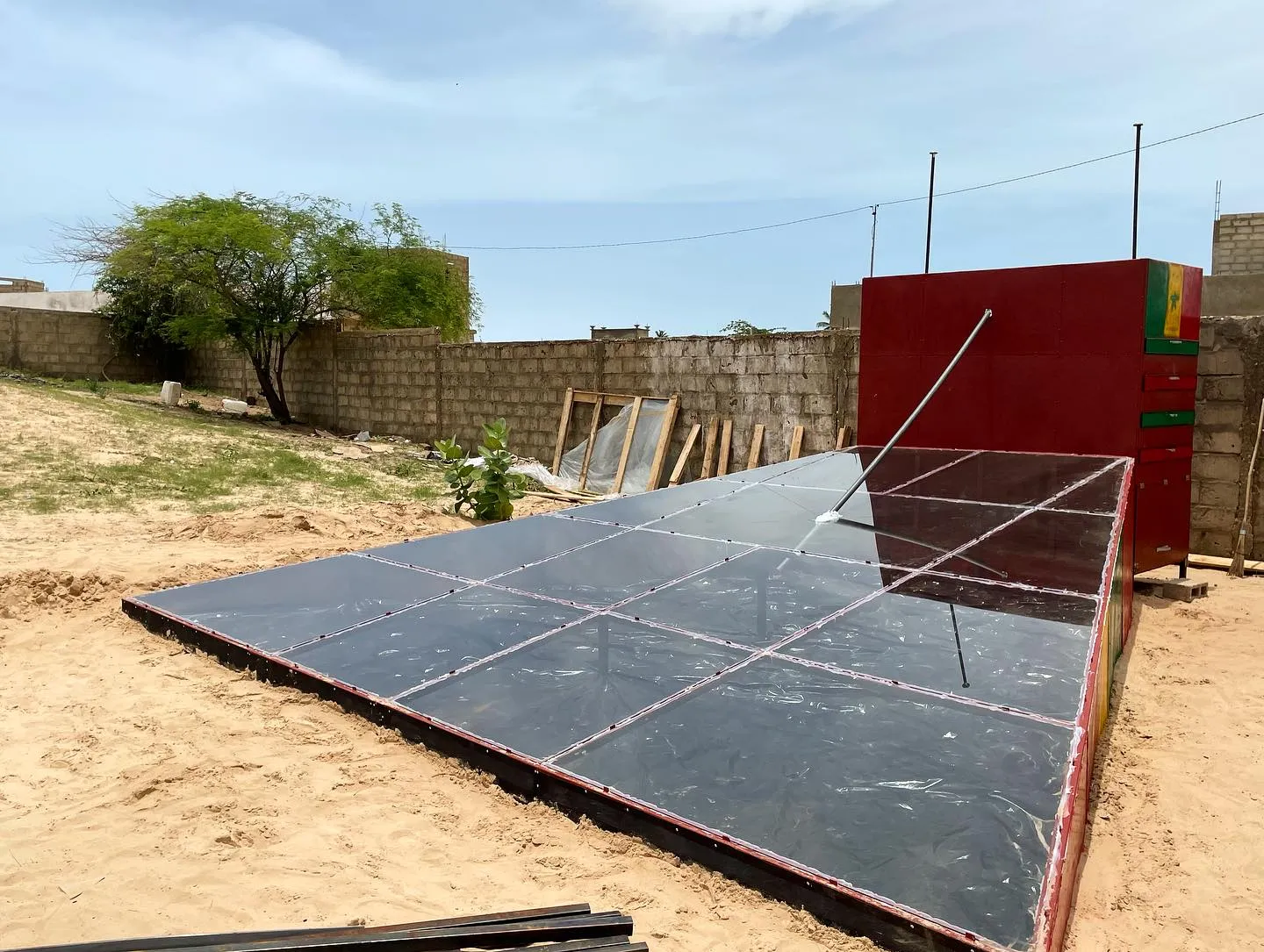
  • Collector in the sun

    Collector in the sun

  • First harvest on the trays

    First harvest on the trays

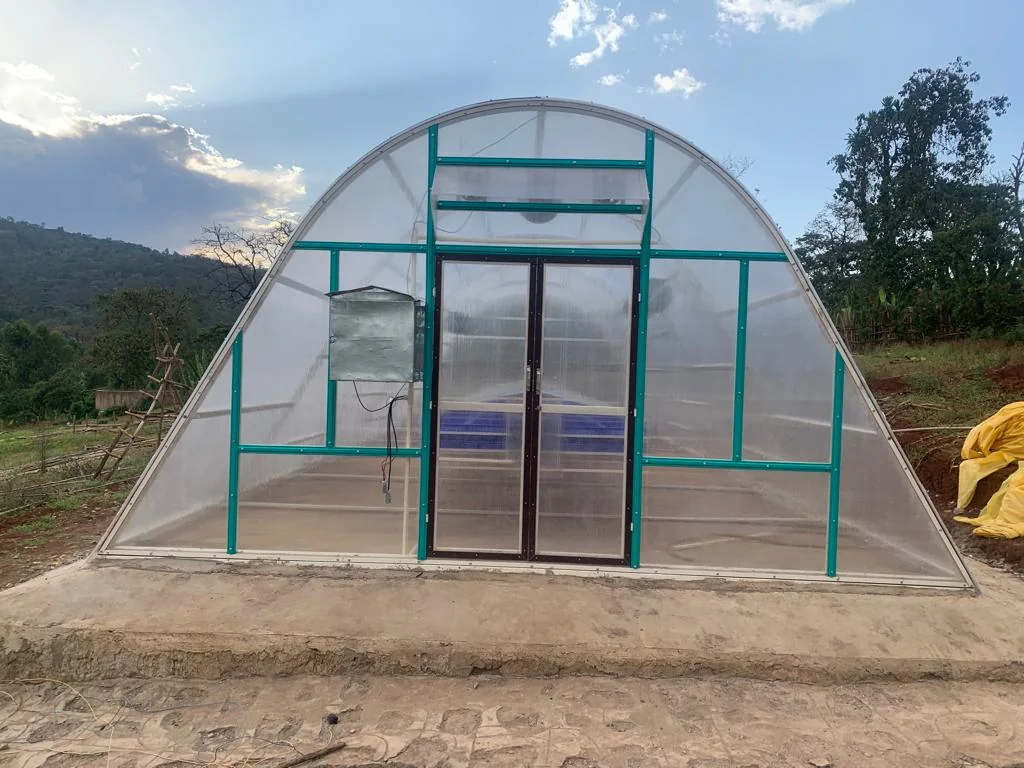
The polycarbonate drying unit from outside, a walk-in solar greenhouse with double doors

Module 02

Polycarbonate drying unit

For cooperatives and larger farms: a walk-in solar greenhouse that dries up to 900 kg per batch.

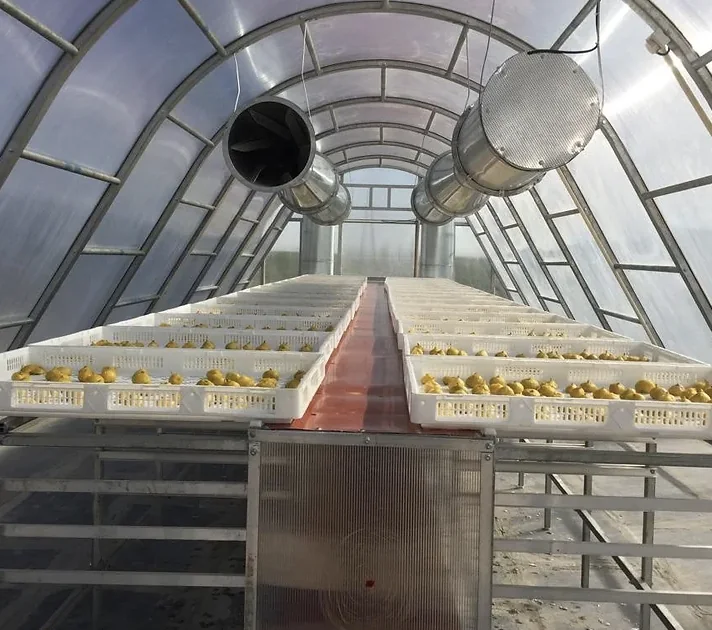
The principle is the same as in the Solar Dryer, only bigger. A shell of 6 mm UV-stabilised polycarbonate lets through 80 to 85 % of the sunlight and keeps the chamber at 45 to 50 °C. Eight fans, powered by their own solar panel, carry off the moist air. A controller monitors temperature and humidity and keeps the drying going even at night.

The produce lies on trays in trolleys. This makes the unit quick to load and unload, and a cooperative can process an entire harvest at once instead of in many small batches. The steel frame is modular and has a food-safe coating.

900 kg
per batch
45 to 50 °C
in the drying chamber
80 to 85 %
of sunlight through the shell

View the Poly Dryer in the 3D model (in German) →
Inside the unit with trolleys, trays full of fruit and two exhaust ducts
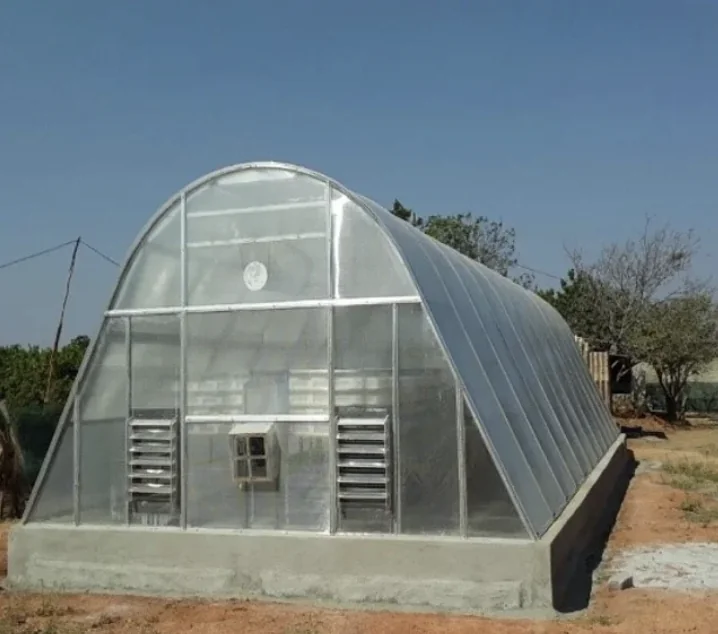
The unit from the side with ventilation flaps

Benefits

What the unit delivers.

  • Up to 70 % faster

    More heat than in the open sun: the harvest dries in days instead of weeks.

  • Protected from rain

    No re-wetting in showers and no hurried covering up.

  • No dust, no pests

    Insects, birds and rodents cannot reach the harvest.

  • Less mould

    Shorter drying gives fungi and aflatoxin less time.

  • Better quality

    Colour, aroma and vitamins are better preserved.

  • Higher prices

    Clean, even produce fetches more at market.

  • More vitamins

    Protection from direct UV radiation and shorter drying spare light-sensitive vitamins such as vitamin C.

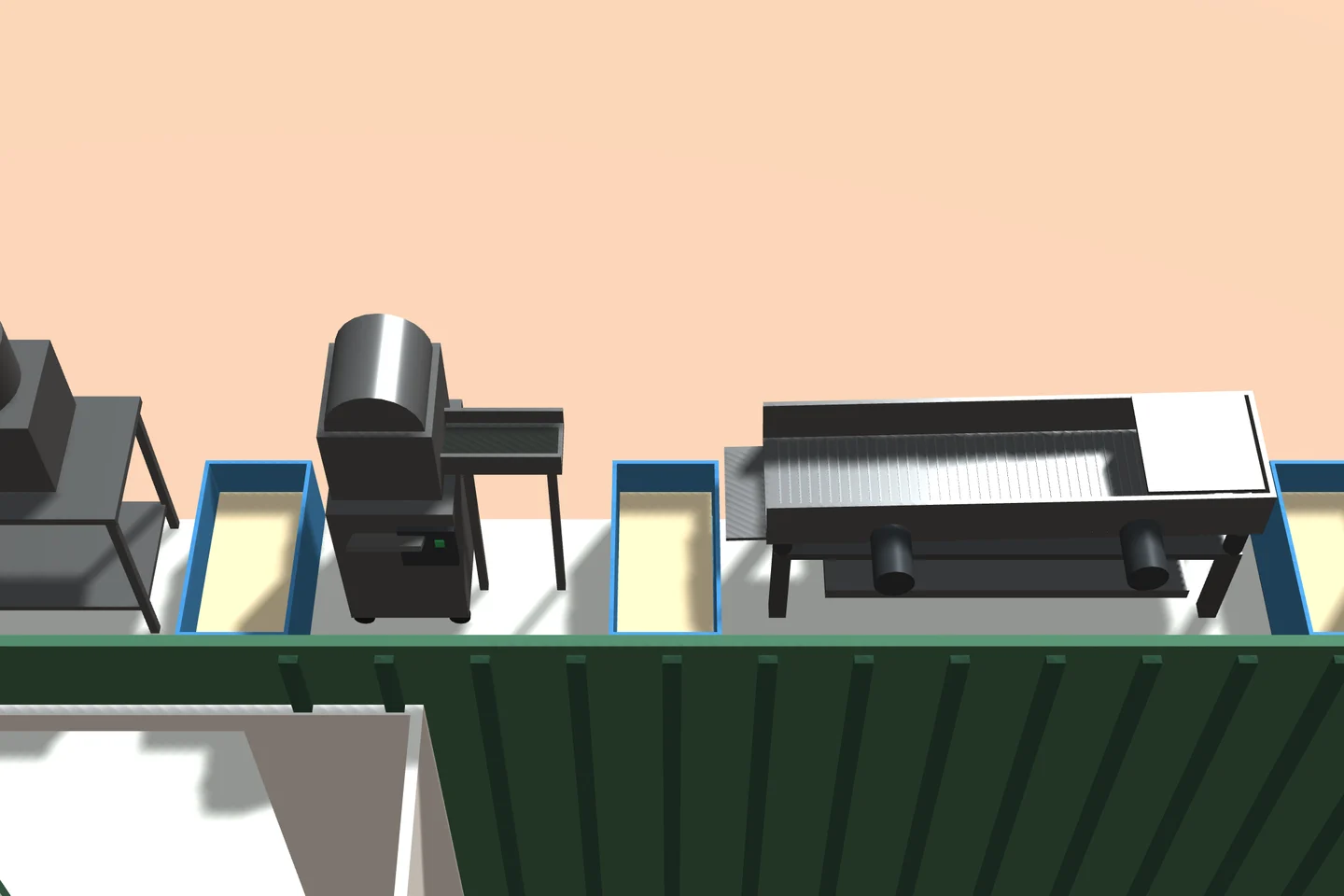
Production container with machine line and hygiene chamber, from the 3D process model

Module 03, extension

Production container

Dried harvest becomes a finished product, right in the village or by the field. The container turns the Solar Dryer into a small production site run by the cooperative itself.

A converted shipping container brings together every step after drying:

  1. 01

    Hygiene chamber

    Washing, hand disinfection and protective clothing before entering.

  2. 02

    Sorting

    Quality control and grading.

  3. 03

    Milling

    Into powder, flour or spice blends.

  4. 04

    Packing

    Weighing, filling and labelling.

  5. 05

    Vacuum sealing

    Long shelf life, ready for transport, trade and export.

The equipment is adapted to each crop, such as mango, cassava, millet or spices. The container is mobile, delivered fully equipped and needs no permanent building.

The value stays local.

Today many cooperatives sell their raw produce straight after harvest, often under time pressure and to middlemen. Processing and packing happen elsewhere, and that is where the profit is made. With the container, processing, jobs and a larger share of the sales price stay in the community, especially for the women who work in processing.

Status

In research with the EES chair at the University of Wuppertal, planned for use in Ghana.

View the production container in the 3D model (in German) →
  • From raw material to product

    Drying, milling, packing, all in one place.

  • Value stays local

    Profit and jobs stay in the cooperative.

  • Hygienic and export-ready

    Protected processing to food standards.